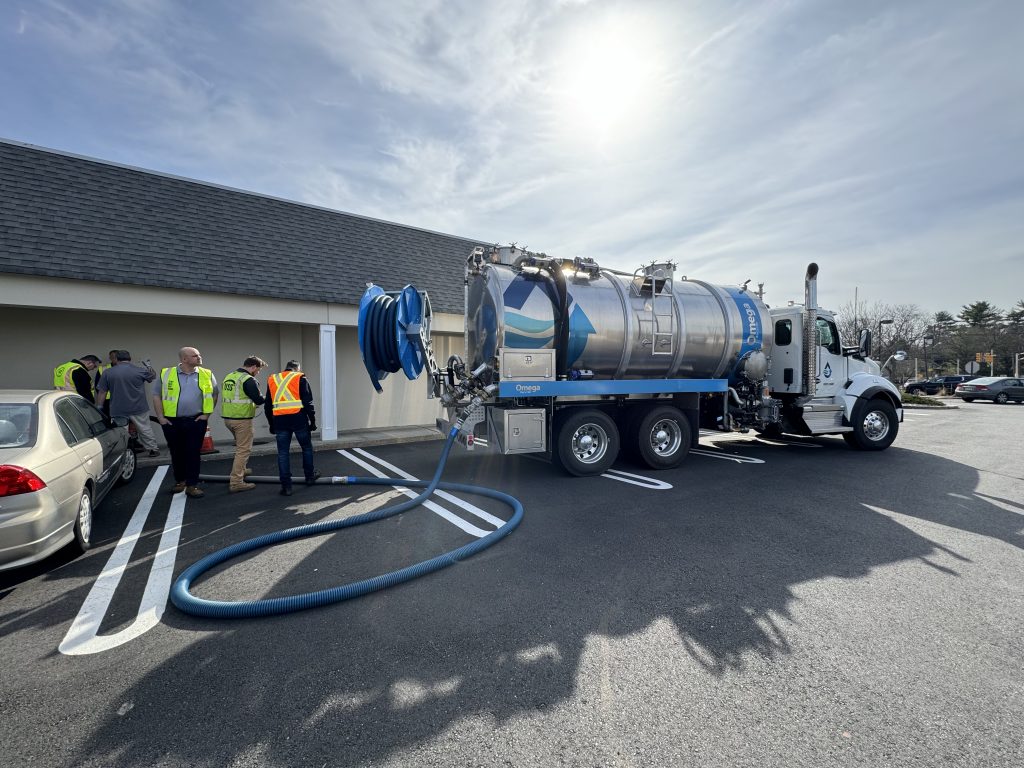
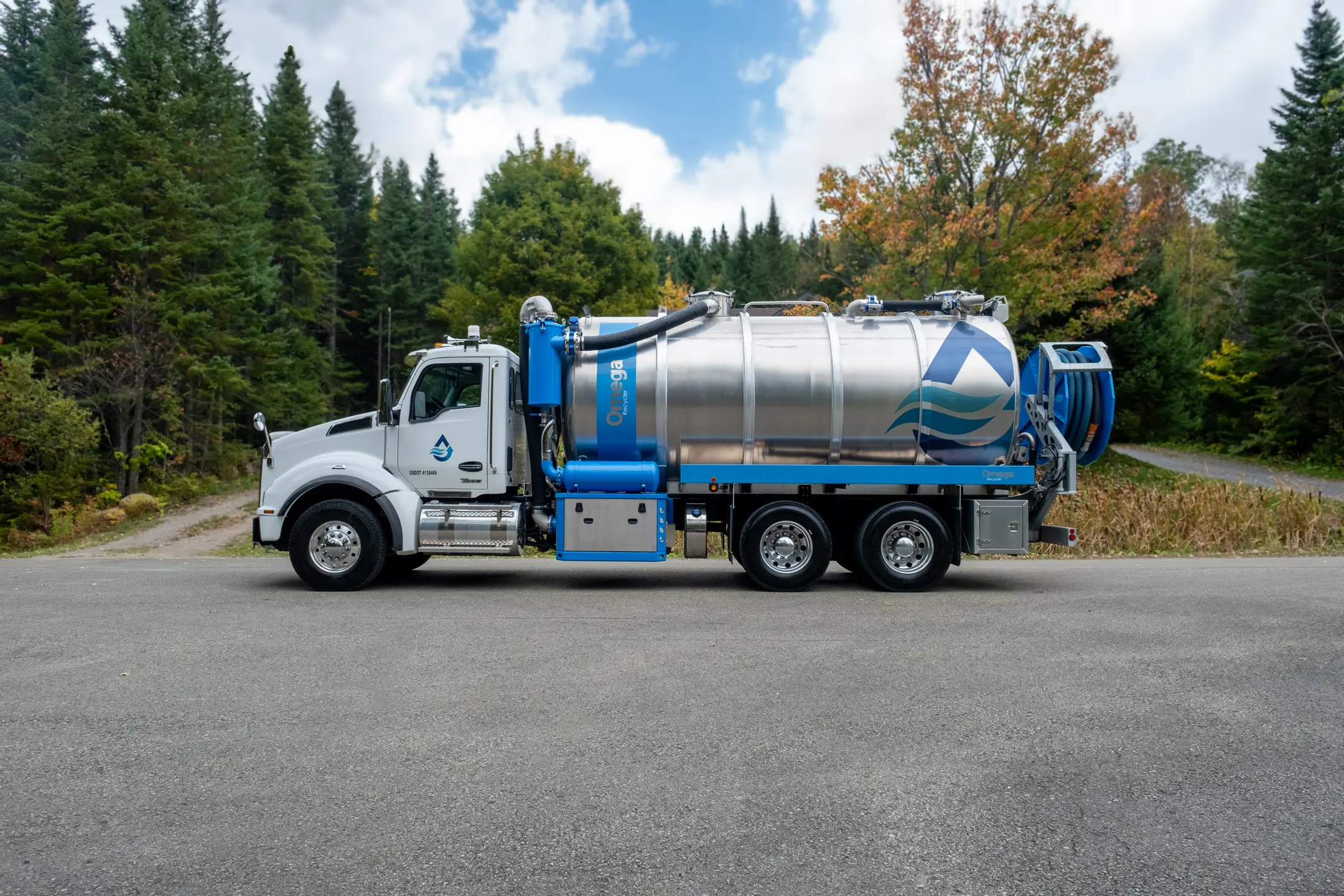
News of the revolutionary Omega LWS filtration technology is spreading faster as the months go by now. The patented system saves septic service operators a substantial portion of their usual travel time and dump costs incurred with traditional pumping, hauling, and disposal of septic tank contents. The total time and money these units save in just a year is astronomical. It’s so much that the cost differential between conventional septic tank vacuum pump trucks and Omega filtration trucks is entirely offset in just the first year.

As the US inevitably transitions to this revolutionary septic tank service technology over the coming years, the change will realize unparalleled environmental, efficiency, and economic benefits for septic service businesses and their customers.

How is Omega Transforming the Septic Service Industry?

Tony Vachon, Omega inventor, and George Bally, Omega Marketing Manager, are standing at the forefront of change — leading the septic tank pumping industry into a paradigm shift. The periodic fundamental process of pumping and dumping septic tank contents is becoming a thing of the past. Leaving with it, is the staggering cost of labor and fuel to transport and dump the incomprehensible weight of sewage water daily that plagues the current system throughout North America.

Complete relief from the outrageously inefficient, slow, needlessly cumbersome, and lower quality old way has spread into segments of the Canadian market, and it is now expanding, especially in the northern US states. It’s gradually coming to every US local septic service market — despite all resistance from even the most recalcitrant pumping service owners and septic tank customers tenaciously clutching their rights to empty tank contents and transporting it for dumping, regardless of the new, profoundly better alternative.

What’s Omega Filtration, and How Does It Work?

This traditional way is to do a full pump out of tanks and traps. Usually, the top layer is grease, the middle area is wastewater, near the bottom is sludge, and solids are settled at the bottom of the tank. Throughout the US, Canada, and other parts of the world, Omega technology enables technicians to offer this conventional service option and offer the new updated method with the same pumper truck.

So, operators can do the same full pump-outs as everybody else in their area may still be doing, until they eventually make the change to the modern method. But the technicians with Omega trucks can also offer the septic tank water filtration alternative for customers who’ve become educated about the technology and are ready to switch to the modern service method.

The service options are based on two very important design components of the modernized pumper truck, which are the two independent compartments that allow pumping liquids and solids into separate tanks. The process is very easy. There are 3 simple steps to separating the liquids from solids into the two chambers:

  1. The wastewater is pumped into one containment compartment on the truck, and the solids go into the other.
  2. The filtration system processes the liquid through a 100-micron stainless-steel filtration membrane. (There are no chemicals or other additives involved.)
  3. The filtered water, which is now up to 99% purified, is routed back into the septic tank.

When this is done — and keep in mind that a full pump-out was done — instead of hauling the vast tons of water away to dump it, only the grease and sludge are removed from the customer’s property.

Benefits for Septic Tank Pumping Operators

If we look at the septic tank and grease trap clean-out in the trade work that’s been done for so many years, by contrast with the most advanced technology now available, it’s been excessively laborious, time-consuming, and costly. The technician lifts the lid, often uses a crust buster to disrupt so he can pull up the liquids and solids, and then he turns on his pump, and then he drives away with the entire septic tank contents on his truck.

When an operator invests in the Omega equipment, after pumping the septic tank, he has the option of filtering and returning the virtually purified water back into the customer’s tank or hauling away the entire contents of the tank to a dump site, per the traditional method. He has both methods available to offer his customers using just one state-of-the-art pumper truck. That means the pumper can serve many more customers than he is able to with just a traditional, now outdated, pumper truck.

Some customers will still insist on having wastewater hauled away, until they understand the important benefits for themselves in having their wastewater filtered and returned back into their septic tank. However, since other customers will opt for the advanced filtration process, the technician can still serve many more customers before the truck tank is filled up and must be dumped.

Therefore, even if many customers continue to choose the water hauling method, pumpers will save a great amount of money on fuel, disposal fees, lost revenues due to extreme travel time for disposal, etc.

Benefits for Septic Tank Pumping Customers

The benefit of Omega for septic service customers is in choosing the filtration service option. There are two key benefits in this choice. First, the charge to the customer can be reduced by as much as 20%, since no wastewater hauling is necessary. The technician is driving away with a much smaller load, so there is a significant financial gain for the customer in avoiding paying to have tons of water unnecessarily hauled away for dumping. The second very important benefit for the customer is the positive effect of leaving the filtered water in his/her septic tank.

The filtered water that is returned into the tank is about the same quality that would be output from the septic tank into the leach field. That means it contains the bacterial flora that was in the tank. It’s the exact same liquid that was pumped out of the tank, but now filtered at 100 microns and then returned.

For septic system owners in some areas, an additional benefit is maintaining the stability of the tank itself when it is left pumped empty. There is a risk that upward pressure can raise the tank and cause a floating effect. In those areas, many customers need to use a garden hose to introduce fresh water into the tank to hold it down. With filtration treatment leaving the water in place in the tank, that concern is eliminated.

Filtration vs Pumping to Become the US Norm

Omega is now a global provider of its ultramodern septic tank cleaning technology. The company now serves Canada, the Northeast US, Western Europe, a part of Australia, and a part of East Asia. Over the past year, the Omega team has undertaken the tedious process of approaching individual state governments in the US for letters acknowledging approval of the high-tech process.

The outreach effort is to eliminate any concerns for long-time operators who may fear making the transition because the new filtration approach is unfamiliar. It’s to alleviate worries for those who may question whether the technology for onsite filtration and returning cleaned water back into septic tanks is safe and universally permitted. Some states have already provided either approval letters or confirmations that approvals are not required, and Omega management expects to be hearing back from many other states in early 2026.

The pricing issue becomes less of a stumbling block when septic business owners, understandably concerned about upfront cost, consider the value of being able to offer two pump-out options to their customers. Plus, there are the extraordinary benefits of the patented septic tank and grease trap filtration systems, high-efficiency blowers, auto-retractable hoses, and other remarkable equipment that make the conversion to the advanced technology much easier to recognize as a wise financial option.

It’s about a $70k purchase cost differential between the Omega and a traditional pumper truck. The ROI is spectacularly fast. It pays for itself in under a year due to the savings of lost time and fuel unnecessarily spent hauling massive wastewater loads, often significant distances to dump sites. The Omega trucks are also more durable than common pumper trucks of various brands. They last longer, have a better, more powerful pump, and higher quality components overall. They’re built with great care, ensuring the best available long-term investment in this class of septic service equipment.

Article written by admin for American Liquid Waste, February 2026 : Omega Septic Tank Filtration – Vast Economic, Efficiency, and Environmental Benefits – American Liquid Waste Magazine